About My Research
Marine scientist blending ecology, marine social science and fisher engagement to equitably protect shark habitats.
Research Journey Overview
From marine biologist to social-ecological researcher
Keywords:
Elasmobranch Ecology & Conservation | Spatial Management | Critical Habitats | Participatory Research | Fishers’ Experiential Knowledge | Ultrasonography | Social-Ecological Systems | Justice Principles
My research has evolved through 5+ years of hands-on work with elasmobranchs and marine protected areas (MPAs). My master’s research explored the social and biophysical requirements for effective spatial management of elasmobranchs, highlighting the importance of integrating social and ecological goals and critical habitats into conservation planning.
Working in the Lyme Bay MPA further instilled that lasting ecological recovery depends not only on sound science, but also on local support and social outcomes.
Building on these experiences, my doctoral research brings social and ecological approaches together to identify critical shark habitats and inform effective area-based management. After identifying adult reproductive areas as a key knowledge gap, I have focused on these habitats using non-invasive approaches.
Collaboration with the angling and commercial fishing sectors has been central throughout this journey, strengthening both my research and its relevance.
Ethos: I believe conservation is strongest when it is locally driven, supported and equitable, and I strive for participatory approaches that meaningfully engage affected communities.
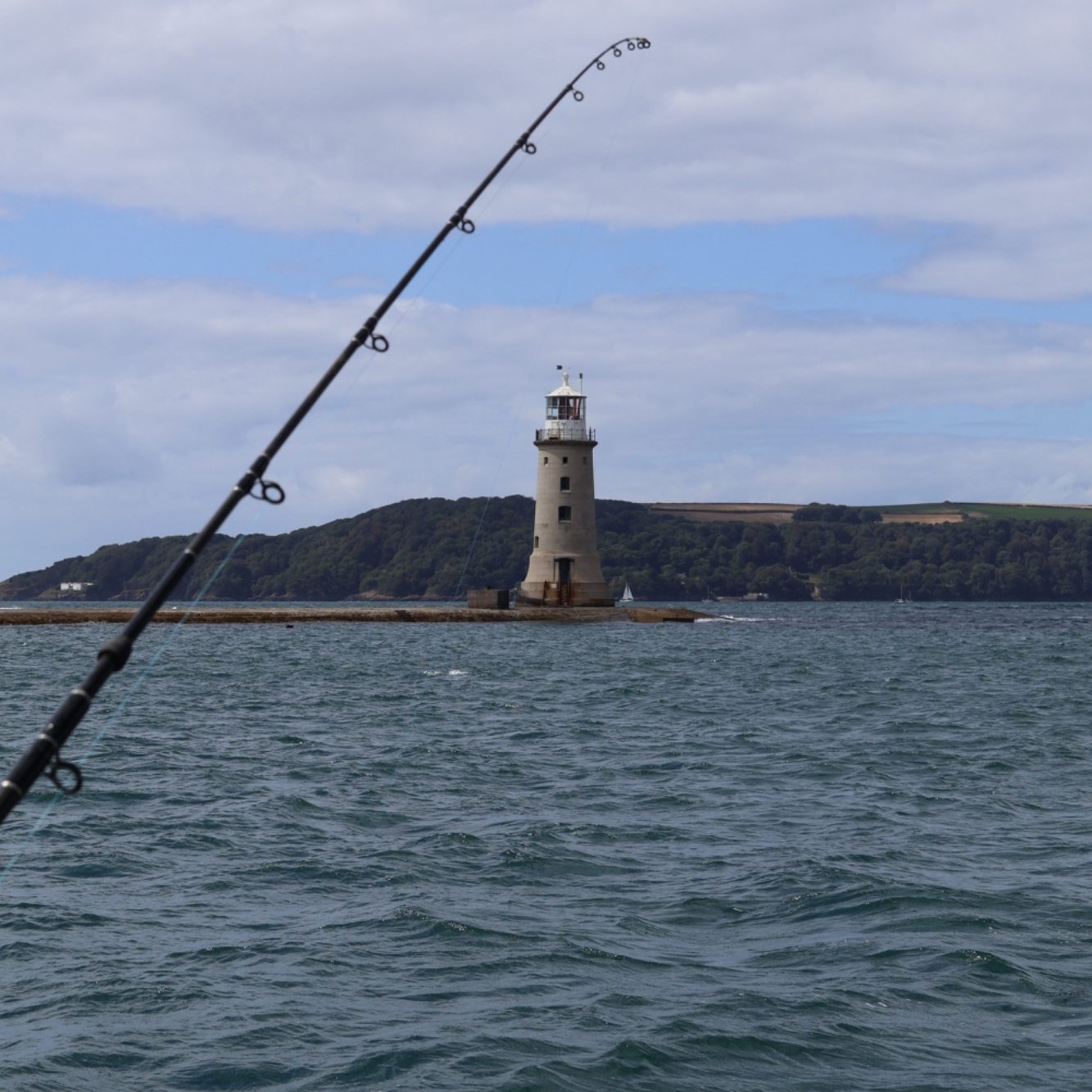
Research Timeline
My shark research and conservation journey began in my undergraduate at the University of Plymouth during which I was an ambassador for the Shark Trust, gathering public support for campaigns such as the ‘Fins attached’ policy and encouraging participation in the ‘Great Eggcase Hunt’. This set me on a path to research and improve UK shark conservation.
Masters Research [2021 - 2023]
Through the ResM research master’s programme (DoS: Dr Ben Ciotti, 2nd; Prof. Emma Sheehan), I was able to design my own research project, which gave me the freedom to explore the topics I found most pressing. I wanted to understand more about the value of marine protected areas (MPAs) for supporting temperate elasmobranch populations, since much of the existing examples came from the tropics.
I conducted a literature review to explore the main variables influencing MPA outcomes for elasmobranchs. It became clear that MPA success is mediated by a combination of biophysical and social drivers. Amongst the most important biophysical drivers were the tendency of individuals to form close habitat associations with protected substrates, and even more so when associations form during vital life stages or behavioural functions (aka, Critical Habitats). However, whilst biological and physical variables (e.g. species mobility, habitat quality, habitat associations) set the theoretical limits of an optimally designed MPA, in reality, it is typically a trade-off between ecological and social drivers which limit MPA performance (e.g. local support, MPA design, monitoring). These key findings represented a turning point for me where began to seriously consider the social aspects of shark conservation.
For my main data chapter, I examined changes in abundance and diversity of the inshore elasmobranch community in response to the Lyme Bay trawling exclusion zone. This area is a particularly interesting case study as it has successfully achieved many of the social and biological variables that often limit MPA outcomes (e.g. an enforced fishing ban, local engagement and support, benthic recovery) making it a prime site for examining MPA performance for temperate species.
By analysing BRUV data, mixed species responses to the partially protected area were found. Whilst trends for many species could not be statistically interrogated due to low occurrences, the fishery closure was found to reduce declines in small-spotted catsharks (Scyliorhinus canicula) meanwhile, thornback rays (Raja clavata) were more abundant inside the MPA than outside, together pointing to potential MPA benefits despite ongoing exploitation of these species. I am currently incorporating the latest years of BRUV data into a manuscript.
Since, this research focussed only on abundance, questions remained over the exact drivers of these trends and whether they could be explained by habitat use patterns.
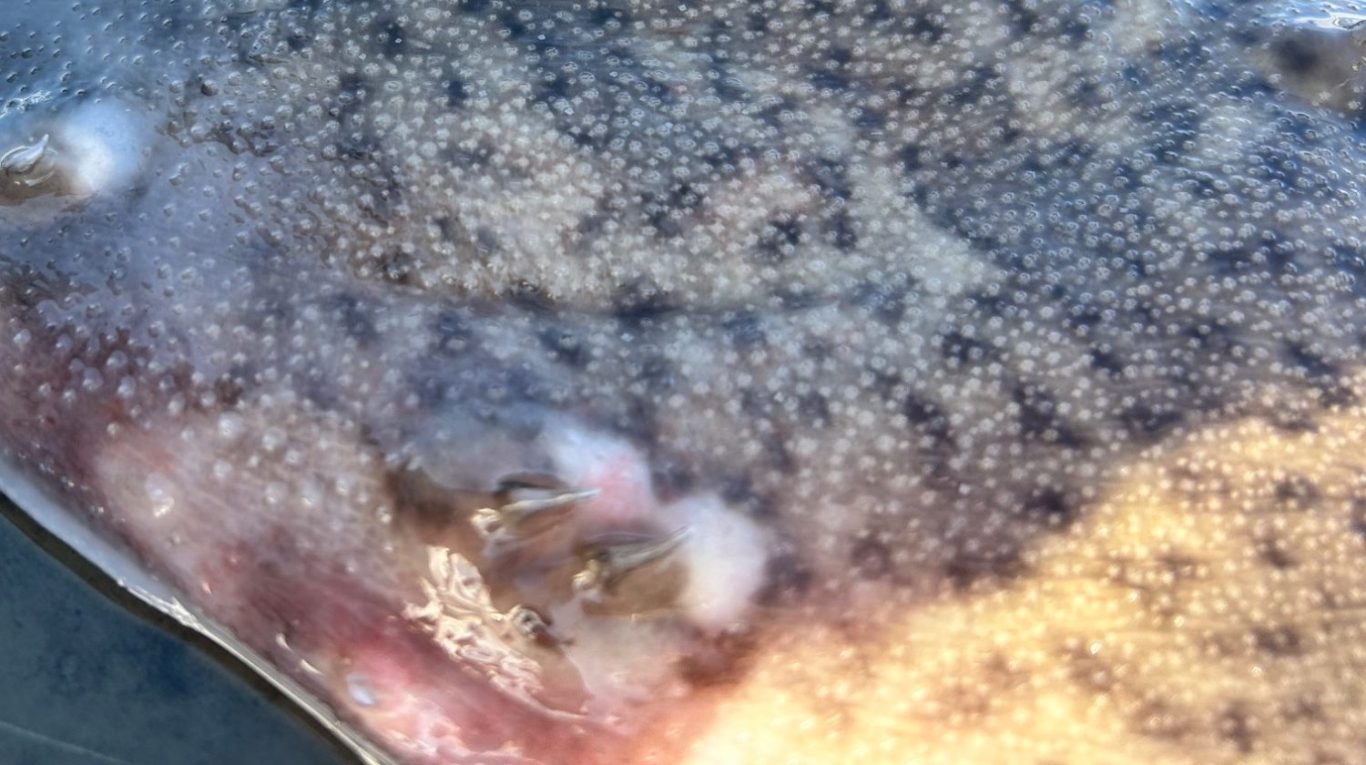
Social-Ecological Researcher: Applied Marine Research (aMER) Unit [2022 - 2023]
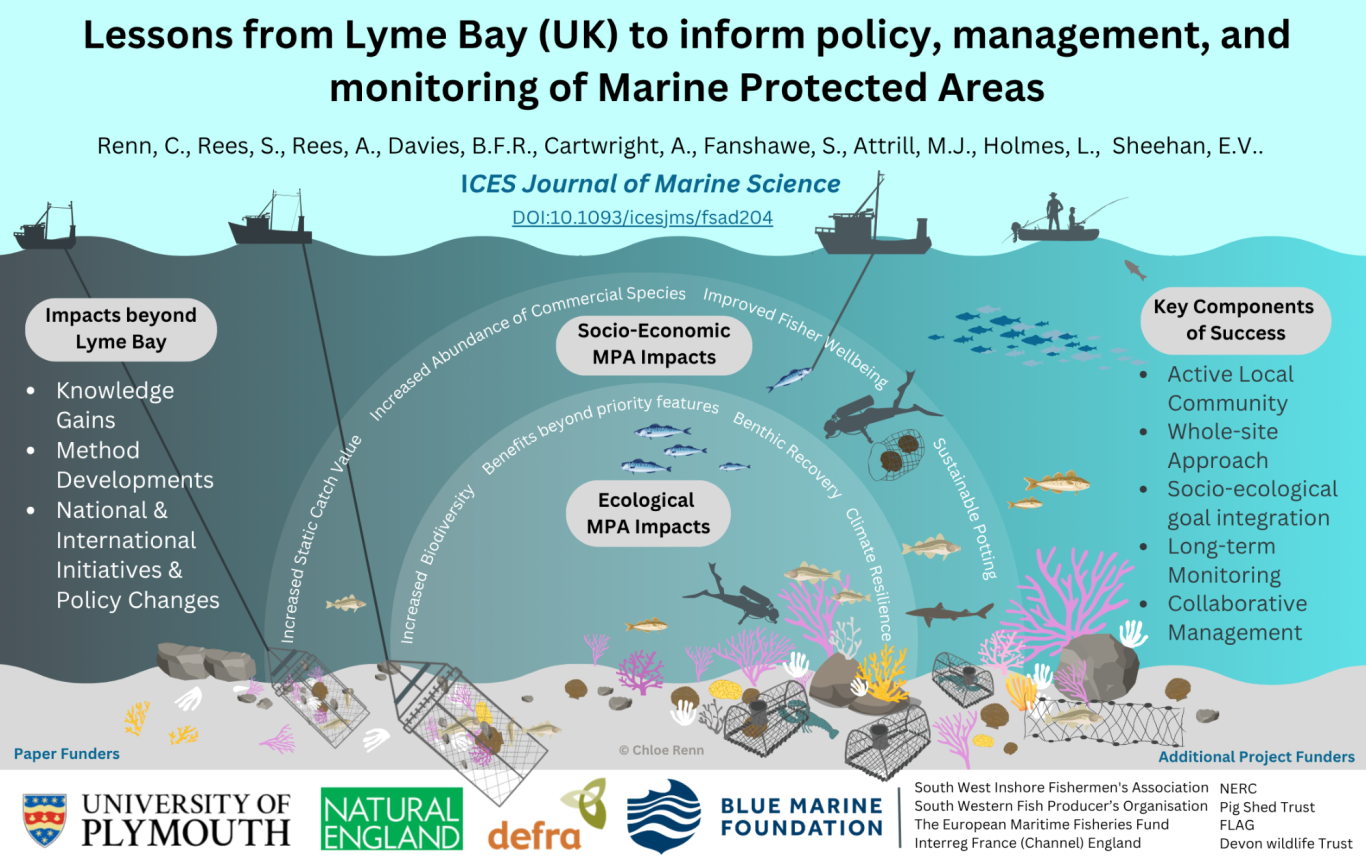
During my masters, I worked as as social-ecological researcher undertaking long term monitoring in the Lyme Bay MPA and supporting with ongoing telemetry research (Fish Intel) in collaboration with the local fishing communities. During this time, I led a review paper bringing together lessons learned from the MPA to inform research, policy and management:
Doctoral Research [2023 - Present]
During my masters, I worked as as social-ecological researcher undertaking long term monitoring in the MPA and supporting with ongoing telemetry research (Fish Intel) in collaboration with the local fishing communities. During this time, I led a review paper bringing together lessons learned from the MPA to inform research, policy and management:
Ecological Methods
Acoustic telemetry, Ultrasonography, Blood Sampling, Catch Records, BRUVs, Towed Video
Social Methods
Semi-structured Interviews, Questionnaires, Social-Ecological Systems Mapping
Frameworks & Principles
Justice Principles, Participatory Action Research, Socia-ecological Synthesis
Discover Chloe’s Research Approach and Community Work
Explore how Chloe integrates field data, policy frameworks, and stakeholder input to guide effective regional shark conservation.
Reach out to discuss research, collaborations, or community projects.
Telephone:
E-mail:
Address: